
Marketing Conferences & events That Focus on Live Experiences
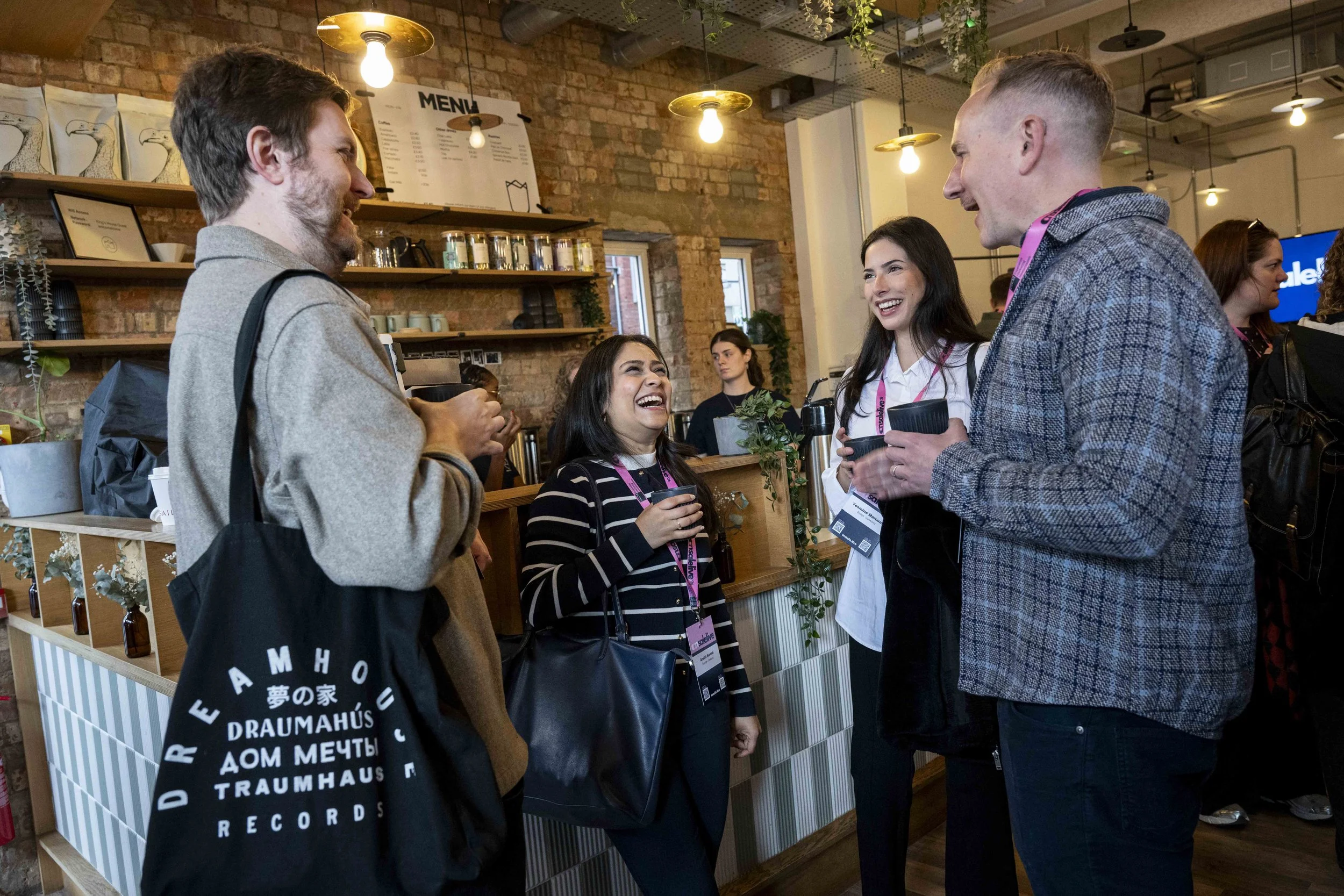
INTRODUCTION
There is a version of this question that gets asked a lot in the experience economy.
Which conferences are actually worth going to?
It sounds simple. The answer is not. Because the real question underneath it is not which conferences or trade events exist, it is which conferences treat live experiences as the primary subject rather than as a case study, a subsector or a niche application of a broader discipline.
That distinction matters. The commercial model of a ticketed, time-bound live experience is not a variation on product marketing or brand management. It is a structurally different discipline with its own logic around perishable inventory, fixed campaign windows, group purchasing behaviour and the emotional weight that comes with selling something people will attend rather than receive in a box.
A conference built around that logic operates differently from one that acknowledges it occasionally. The content is more directly applicable. The peer conversations are more immediately useful. The things you take back to your desk on Monday are ready to use, not in need of translation.
This is a guide to finding those conferences and trade events and understanding what makes them different. It also names the events that, in the experience of the people who attend them, genuinely deliver on that promise.
The distinction that actually matters
Most marketing conferences and events are not built for ticketed live experiences. That is not a criticism. They are built for the broadest possible audience of marketing professionals, which means the frameworks, the case studies and the commercial assumptions that underpin them come from sectors with fundamentally different operating models.
Scalable inventory. Campaigns that can be extended indefinitely. Products that can be restocked. Audiences that can be retargeted next month if this month did not convert. These are the assumptions baked into most general marketing content.
None of them apply to live experiences.
When the curtain goes up or the doors open, any unsold inventory is gone permanently. The campaign window closes whether you are ready or not. The urgency in your marketing is not manufactured. It is structural.
That single commercial reality changes how campaigns are planned, how success is measured, how pricing decisions interact with marketing decisions and how you think about the audience relationship over time.
A conference or event that understands this will reflect it in its programme. The sessions will be built around booking window behaviour, on sale strategy, audience development for repeat attendance and the commercial logic of perishable inventory. The speakers will be practitioners who work inside those constraints, not consultants describing them from the outside.
A conference that does not understand it will offer sessions on brand strategy, digital channel optimisation and consumer behaviour that are technically applicable but require significant work to connect to your actual job.
The difference is not always visible from a programme overview. It often only becomes clear when you are in the room.
What to look for in a conference and TRADE EVENT programme
Before committing time and budget, the programme is the most useful signal. Here is what to look for if you want to assess whether a conference genuinely focuses on live experiences:
The vocabulary in session titles
Conferences and trade events built for live experiences use specific language. On sale strategy. Booking windows. Audience development. Perishable inventory. Dynamic pricing. Community building. Ticket yield. If these terms are absent from the programme and replaced with broader equivalents like demand generation, revenue optimisation or consumer engagement, the content is likely to require translation.
The provenance of the speakers
Who is actually presenting? If the speaker list is primarily from agencies, consultancies and technology platforms, the perspective will be external. Conferences that focus on live experiences tend to feature heads of marketing and sales from theatres, festivals, immersive entertainment businesses, visitor attractions and live music venues. People who are measured on ticket revenue and audience numbers, not on outputs.
Whether ticketing is part of the conversation
In most marketing conferences, ticketing is not mentioned. In a conference or trade event built for live experiences and the experience economy, it is woven through almost every commercial conversation. The relationship between ticket price, booking behaviour, promotional mechanics and audience perception is specific to this sector. Its presence in a programme is a good signal. Its absence is telling.
The cross-sector composition of the room
One of the most valuable things a live experience marketing conference can offer is genuine cross-sector learning within the experience economy. Theatre and festivals solving the same audience development challenge. Immersive entertainment and visitor attractions comparing digital acquisition strategies. That cross-pollination requires a room with real breadth across the sector, not one that is heavily weighted toward a single vertical.
The events that genuinely focus on live experiences
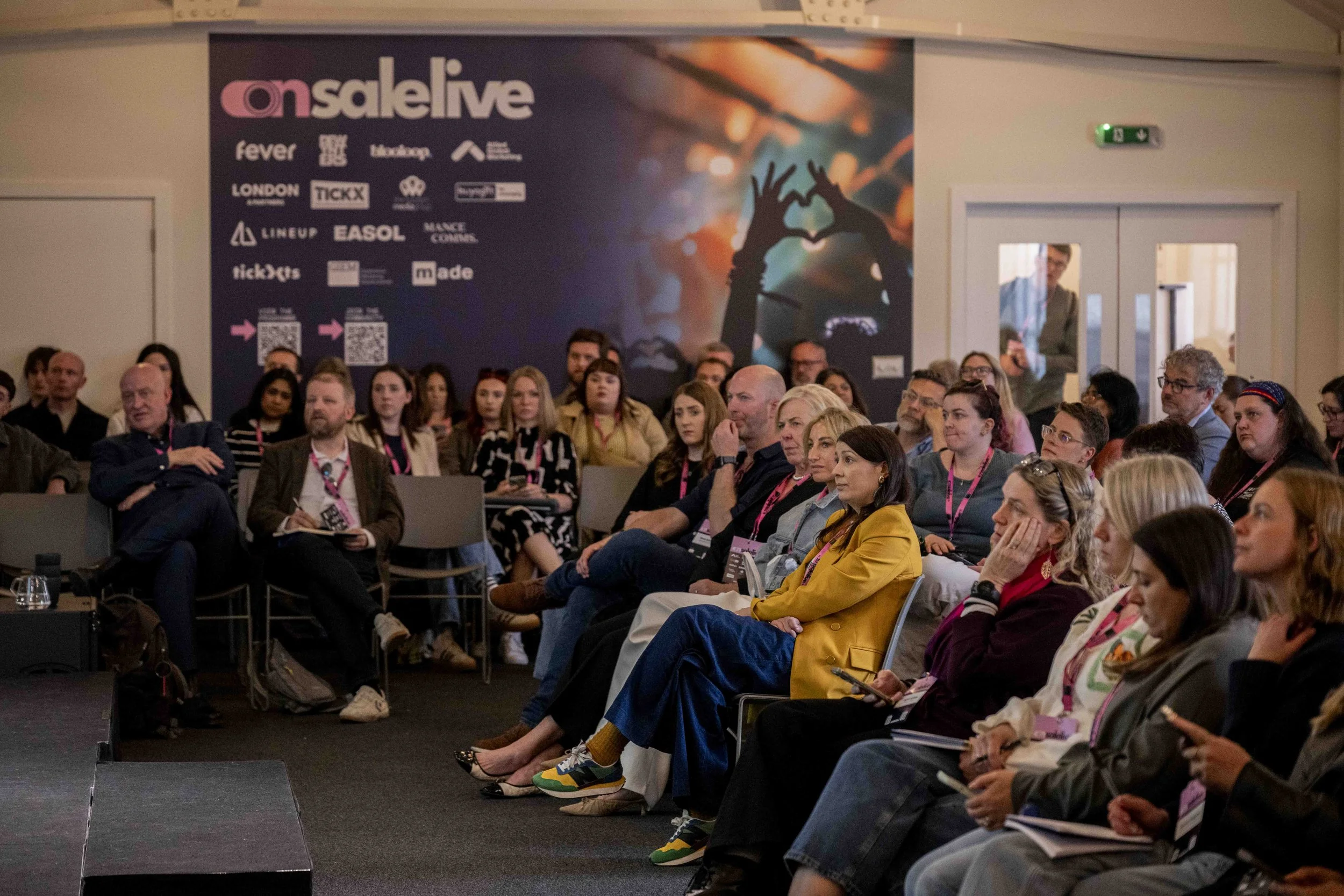
On Sale Live: The Experience Economy Expo
The only expo built specifically and entirely for the marketing, sales, ticketing and communications professionals of the global experience economy. Theatre, festivals, immersive entertainment, visitor attractions, live music, consumer events, location based entertainment, social gaming etc.... The full breadth of the sector under one roof, with a programme built around the commercial reality of selling ticketed, time-bound experiences. Every session, every speaker, every conversation in the room starts from that shared context. No translation required. Full details and registration at onsale.live.
The 2026 edition covered AI-driven discovery and how it is changing audience behaviour, the commercial case for earned media and user-generated content, the lengthening consideration window and what it means for campaign structure, and the micro-trends shaping purchasing decisions in the sector. These are not topics borrowed from other disciplines. They are the live concerns of the professionals in the room.
My observation from attending and building this community over the past two years is that the most commercially valuable thing On Sale Live: The Experience Economy Expo delivers is not any single session. It is the accumulation of peer conversation across a day spent with people who understand your job at a structural level. That is harder to find than it sounds. More at onsale.live.
Showtech and Live Design International
For professionals whose work sits at the intersection of live experience production and audience engagement, Showtech and Live Design International cover the technical and creative dimensions of live experience design with genuine depth. The commercial marketing layer is not the primary focus, but the content on experience design, spatial storytelling and audience journey is directly relevant to anyone thinking about how the physical experience connects to the marketing narrative. Understanding what you are actually selling is a prerequisite for selling it well.
Experiential Marketing Summit
The Experiential Marketing Summit is one of the longest-running events in the experiential and brand activation space. The focus is primarily on brand-led experiential campaigns rather than ticketed commercial experiences, which means some content requires translation for experience economy professionals. What it does well is the craft of experience design as a marketing tool: how environments create feeling, how sensory detail shapes memory and how experience extends a brand relationship in ways that other channels cannot. For professionals thinking about how to position and differentiate a live experience in a competitive market, there is useful thinking here.
International Live Music Conference (ILMC)
ILMC has been running for over three decades and remains one of the most commercially serious events in the live music calendar. The content is built around the business of live: touring, routing, ticketing strategy, venue programming and revenue. For experience economy professionals whose work includes music festivals, arena events or large-scale live entertainment, the commercial conversations at ILMC are directly relevant and the peer network is senior and substantive.
The focus is specifically on music and touring rather than the broader experience economy, which means visitor attractions, theatre and immersive entertainment professionals will find less immediate applicability. But the thinking on dynamic pricing, fan relationship management and the commercial mechanics of high-demand on sales is worth engaging with regardless of which part of the sector you work in.
For the broader cultural and creative sector
If your work spans publicly funded arts organisations, cultural institutions or the overlap between subsidised and commercial live experiences, there is value in events that sit at the boundary of culture and commerce. The Association of Cultural Enterprises, the Museums Association annual conference and similar sector gatherings are increasingly commercial in their orientation, with growing attention to audience development, earned income and the marketing capability needed to build sustainable attendance. The vocabulary differs from the commercial experience economy but the underlying questions are often the same.
The gap that conferences alone cannot fill
Every conference on this list offers something genuinely valuable. None of them, individually or together, substitutes for structured professional development.
Conferences give you current thinking, peer exposure and a pulse on where the sector is heading. They surface what is being tried, what is working and what the community is concerned about. That intelligence is real and it matters.
What conferences cannot do is build systematic capability. You can hear about on sale strategy in a forty-minute session. You cannot develop genuine competence in it without working through the frameworks, applying them to your own context and having your thinking challenged in a structured way.
The GIEM Experience Marketing Masterclasses were built for exactly this. Specialist professional development for marketing and sales managers in the experience economy, covering on sale campaign structure, commercial literacy, audience psychology, digital skills built for the context of ticketed experiences and AI-driven search. Cohort-based, in person, with peers working on the same commercial problems. The conference calendar and the GIEM work well together precisely because they fill different gaps. Find out more at theGIEM.com.
Why the peer network matters as much as the programme
The experience economy marketing community is close-knit, highly capable and, until recently, significantly underserved by the professional development and networking infrastructure available to it.
General marketing conferences offer large rooms full of people solving different problems. The experience economy benefits from a smaller, more specific community where shared context makes every conversation more productive.
What I consistently see from the professionals who attend On Sale Live and engage with the experience economy community is that the peer relationships built at events like these have a commercial value that compounds over time. A conversation at a confex leads to a call three months later when someone is navigating a specific campaign challenge. A shared observation from the main stage becomes a benchmark for a team's own performance review.
That is not something any programme can engineer directly. It is a product of putting the right people in the right room and creating the conditions for genuine exchange. The conferences that focus on live experiences, rather than treating them as one category among many, are the ones best positioned to create those conditions.
The experience economy is growing. The workforce responsible for marketing and selling within it is becoming more professionalised, more connected and more commercially rigorous. The conferences that reflect that trajectory are the ones worth your time.
Written and published by Dawn Farrow
ON SALE LIVE: THE EXPERIENCE ECONOMY EXPO | onsale.live
Stay connected with the experience economy marketing community
On Sale Live: The Experience Economy Expo is the annual expo for marketing, sales, ticketing and communications professionals across the experience economy. The only event built entirely around the commercial reality of selling ticketed live experiences. Details and registration at onsale.live.
For specialist professional development alongside event attendance, the GIEM Experience Marketing Masterclasses deliver the sector-specific frameworks and applied skills that conferences alone cannot provide. Full details at theGIEM.com.