
Tourism and the experience economy: are you leaving money on the table?
INTRODUCTION
If there was a session of the day at On Sale Live 2026 that delighted a room full of marketers hoping to come away from the confex with a strategy for untapped audiences, it was the tourism session that spoke of the sheer scale of potential new business.
With tourism to the UK rapidly on the rise and London regularly voted the number one city in the world and recipient of the coveted 2026 World City Prize, the sector packs a punch in terms of employment - accounting for one in five jobs. And according to research by national tourism agency VisitBritain, tourism is worth £147 billion annually to the UK and generated £52 billion in tax revenues for the UK government in 2024.
Just this week, the Mayor of London announced a new £7m international tourism and investment campaign to promote London. Delivered by the Mayor’s growth agency London & Partners (L&P), the campaign will promote the capital across Europe, the USA and Asia, celebrating why London is the best city in the world and helping to further drive visitor numbers and business.
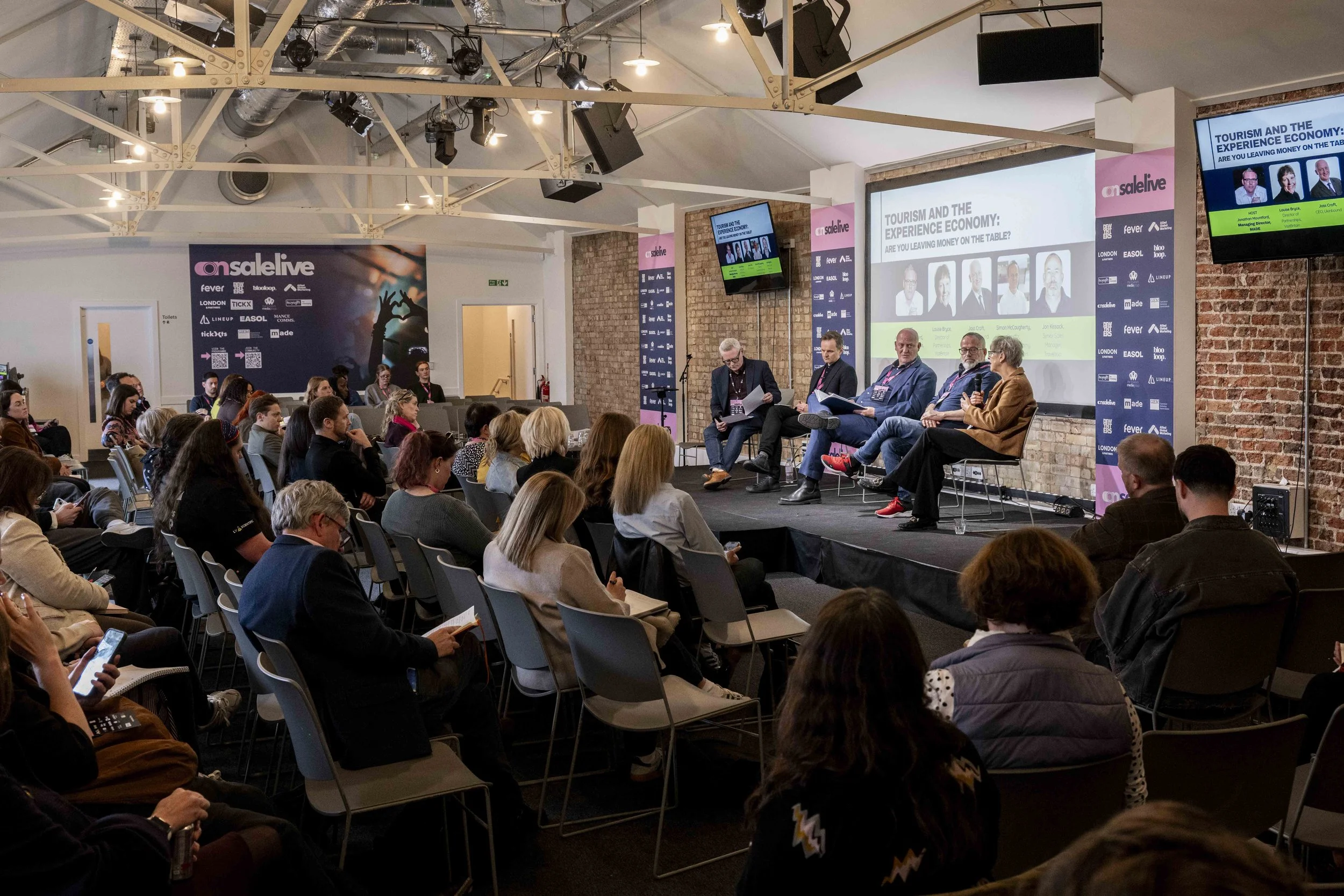
So how should the On Sale Live community tap into this burgeoning visitor market arriving in the UK and keen to experience the best culture and attractions that the country has to offer? The panel, led by tourism experts Made, unpacked how best to target the opportunity and not miss out on a potential revenue boost.
Getting started
The all-important question of how to get started, for organisations not yet actively targeting the tourism market, opened the session. Louise Bryce, head of partnerships at Visit Britain, urged the room to start with the basics and added that for international visitors, keeping information really accessible and clear to the target customer is essential. Her comment, on “making it attractive and easy to digest,” was echoed by Joss Croft, CEO of UKinbound, the UK’s leading trade association for the inbound visitor economy, which represents more than 500 businesses including tour operators, and destination management companies. For the latter and other intermediaries, the clearer the proposition, the more likely that it could be used on a suggested itinerary.
Underscoring the power of intermediaries, Croft added that examining how international tourist behaviour differs from domestic audiences and how suppliers need to put themselves in the minds of the consumer is crucial. He explained: “Around 80% come to the UK by booking through an intermediary. International visitors do not book direct, the way domestic tourists do, so they will need reassurance as to what they need before they come.”
The opportunity therefore can be won by those that start early, added Jon Kissack, senior sales manager at Travelzoo, who explained that “you need to market to people before they arrive in the country, so you need to start early.”
Prioritising channels
The panellists were aligned that when it comes to converting cultural curiosity from international visitors into those coveted ticket sales, leaning into some of the more traditional marketing methods can be a winning approach.
Key marketing channels including PR and traditional media shouldn’t be overlooked. “It’s all about the storytelling,” explained Visit Britain’s Bryce, “we need to be able to share the stories about the experience easily with the media.”
And for international visitors, one very important group of influencers can really impact their spending patterns during their stay. While user-generated content from trusted creators is welcomed, Jonathan Mountford, director at Made, revealed that the real tastemakers for international travellers come from an often-underlooked source: “the role of the hotel concierge is so important, and the only way to approach them is via traditional outreach. Make sure you get them to experience your experience.”
Trade association impact
As the On Sale Live audience knows all too well, there’s no substitute for when you find your community of peers. A community-led approach means that everyone can share the benefits of a combined offering, outlined Visit Britain’s Bryce. “Work with partners in your area, as the stronger offering you have at regional and national level, the stronger the customer will see your product.” Visit Britain also offers research and insights to help members get an overview of why people come to Britain and what they do when here, which can be used to help shape campaigns and decide which of the new audiences to target, she added.
Partnerships with trade associations can unlock new ticket sales, agreed Simon McCaugherty, London & Partners experience economy director. With 35 million overnight stays in London and 200 million day visits a year, ambitious marketers of attractions and ticketed experiences could be working with London & Partners to tap into the channels that are already reaching these visitors. And these visitors are less price sensitive as often, they are looking for special bucket-list holiday moments, he added, citing Abba Voyage, where less than 20% in attendance are Londoners.
Power of large events
From the Taylor Swift effect, to the power of festivals, and sporting events, the allure of large-scale events in attracting more tourists and dispersing them widely to the benefit of the whole country was explored. With the successes of the Olympic Games, through to the Tour de France which has such a strong economic bounce, the potential for large-scale events to serve as a driver for attracting more tourists to experiences mustn’t be overlooked. And business events can also be another untapped market, bringing in more than £158 million into the London economy in 2024, with an estimated 80,000 delegates heading to the capital this year.
Discussing the potential spend of conference guests that have finished their overseas work but want to explore and experience Britain, Bryce added that marketers should “get involved, as you can only win. There’s lots of fragmented pots of money that we can pull together that can hopefully trickle down to support the experiences that you’ve been creating.”
And with tourism being the fastest growing sector in the world, the opportunities will only continue to augment, concluded UKinbound’s Croft. Savvy marketers have an abundance of new audiences to target.
A Note on What to Look For
Most marketing events, even excellent ones, are built for a broad audience. That means a significant portion of every day is content that does not apply to your context.
When evaluating any conference, the questions worth asking are: Who else is in the room? Are the commercial pressures they face similar to mine? Will I need to do significant translation work to apply what I hear?
The experience economy has its own commercial logic. Perishable inventory. Fixed booking windows. Audience decisions made socially rather than individually. Urgency that is real, not manufactured. The more an event reflects that logic, the more immediately useful it will be.
The events listed here do that, each in a different way. Some speak directly to the sector. Some sit adjacent but carry relevant insight. All of them are worth your time in 2026.
Stay connected with the experience economy
On Sale Live: The Experience Economy Expo is the annual expo for marketing, sales, ticketing and communications professionals across the experience economy. Details and tickets at onsale.live.
If you are looking for structured professional development alongside events, the GIEM masterclass covers the commercial frameworks, on sale strategy and digital skills that experience marketers actually need. Find out more at theGIEM.com.
For strategic consultancy on immersive experience ticketing, commercial strategy and audience development: dawnfarrow.com.