
Exploring fandoms: turning fans into advocates
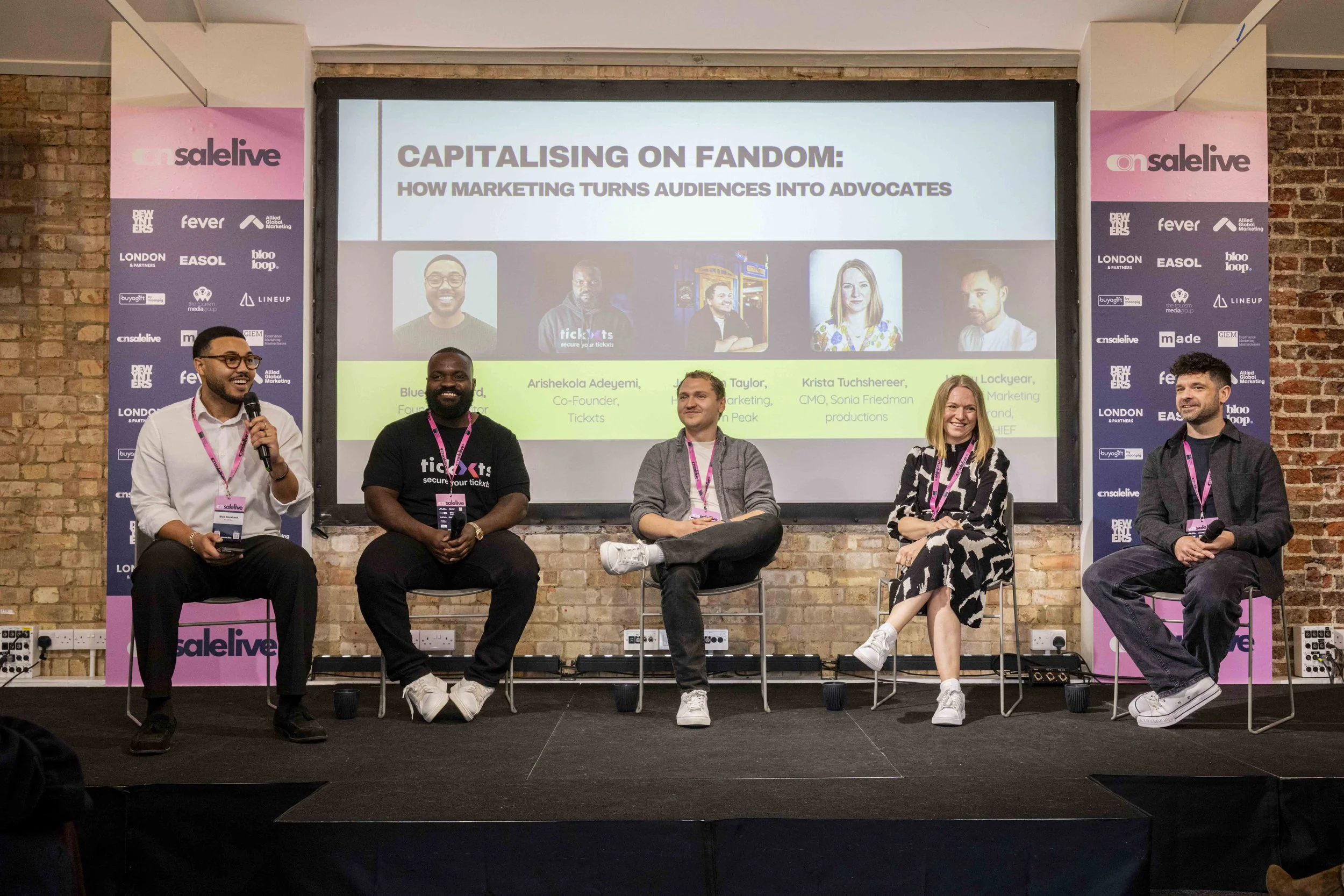
Glancing around the room as Blue Bookhard, founder and editor-in-chief of London’s dance and electronic platform, No Skips, steps up to chair the first panel, it’s clear that every marketing lead in the room has a distinct fandom or two to focus on. While some may be united by entertainment genres, others might be led by a specific subject, and some may have multiple fandoms to engage, with various nuances uniting these collective groups of enthusiastic fans.
A cursory consideration of this summer’s forthcoming World Cup serves as an example of the nuances that marketing professionals need to consider when assessing the appetite for live experiences. While at surface level and for the masses, the fandom may be that of loyal fans supporting their country, layering across this lies the ardent fanbase of star players like Messi and Mbappé whose fandoms know no geographic boundaries. All will be hungry to lay their hands on those exclusive tickets - and all are potential World Cup advocates with the right marketing engagement.
A multi-layered approach
Taking this multi-layered approach to potential fandoms is essential to winning in today’s experience economy. Delivering one of the keynotes of the day, Stuart Beare, owner and chairman of 4th generation family business, Tulleys, described the evolution of one of the UK's best-known seasonal attraction venues and operators. Early trade relied heavily on the summertime ‘pick your own strawberries’ produce-based offer and when pumpkins were introduced, Halloween was barely celebrated in England, so transitioning to an experience-based business seemed a tall order.
However, it was 1997 that served up a seminal moment for the business. When the first Harry Potter book came out, Beare described a complete transformation as “suddenly every kid wanted to celebrate Halloween with a pumpkin.” Leaning into the burgeoning Potter fandom, Beare was able to shift from commodity selling to experience selling, as Tulleys was no longer merely a farm selling produce. It was a business retaining a loyal customer base of the past while tapping into the experience economy, exploring fandoms including Harry Potter and creating experiences for them to keep returning to, with the expansion of the Pumpkin Festival.
And the allure of the Potter fandom is something that Krista Tuchscherer, chief marketing officer at Sonia Friedman Productions knows all too well. As she explained: “we’re caretaking the fandom. When the Cursed Child opened, there had been no new Harry Potter stories for 13 years, so when we developed the play, we were conscious that we needed to caretake and work within the fandom, to be clear that it's a different story but it's still canon.” And that care had to be taken across every marketing touchpoint, from the initial announcement through to the website and then the actual experience at the theatre, itself so that the expectations of the fans were met.
Harry Potter and the Cursed Child then became the precursor to another show that required the most detailed caretaking - Stranger Things: The First Shadow also took an established fandom into theatres to experience their beloved show in a new format and under an unknown storyline. However, it's not always about the IP. “With Stranger Things: The First Shadow, we had both fans of the show and fans of Stephan Daldry. It’s not always about the IP, it can be about the creatives, or the cast,” said Tuchscherer. More recently she added, Tom Fletcher’s music in Paddington the Musical gave a touchpoint to the McFly fans, some of whom hadn’t yet experienced live musical theatre.

Establishing the trust
And as businesses grow, it becomes essential to develop a trusting relationship to keep fans on the journey to ensure advocacy. Harry Lockyear, head of marketing and brand at Mischief, creators of award-winning comedy for stage, screen and beyond, shared an overview of the business’ approach, stating: “we have fans of the original creative team that people have personal connections to. Then we have fans of the brand, fans who feel part of the world. As we grow and develop, we need to keep our fans with us, to take them on the journey with us to the next show and across new forms.”
Describing the journey to developing a musical, he acknowledged that for some fans, they are being invited into places they didn’t know they might like, therefore establishing trust is key. “You have to trust your fans as well as asking them to trust you.” And it’s this trust that UK-based ticketing and event technology platform Tickxts co-founder Arishekola Adeyemi is keen to deliver back to the fans. Speaking about how he engages them to become true advocates, he described turning fans into a core part of the festivals they love by incentivising them to invite their friends to join them. Giving each of them their own dashboard means that they are “allowed to feel part of that festival and its success”.
Selling the community
With each fandom differing, understandably so too does the marketing approach deployed to turn those fans to advocates. Lead-generation campaigns have been less valuable for the likes of Sonia Friedman Productions, with earned media through a strong PR campaign on ‘announcement day’ remaining one of the strongest ticket shifters at the start of the process.
Adeyemi notes that “we are all content creators, you go out and you share. The organic footage, the UGC, that is the ad.” And that UGC gives businesses a window into their fans' world, enabling them a chance to really get to know them to then turn them into advocates. Describing Facebook groups as a ‘goldmine’, with literally a group for everything, Adeyemi recommended really exploring audiences, from where they show up on social platforms through to asking for feedback via open-box questions as “data is key.”
And a business that seems to be writing a marketing playbook for taking fans on the journey to becoming advocates is award-winning immersive experience Phantom Peak. Boasting a 30% return rate, with some fans returning 5 to 25 times a year, the business knows its most loyal frequenters by name. A season pass and monthly membership was introduced and while the experience closed for relocation, a digital platform ensured fans were kept engaged and ready to experience its next iteration. Dedicated meetups for all in the community, complete with the singing of oaths and a quiz, ensure that the fandom is frequently welcomed in to spend time with the team and afforded an IRL moment to feed back and connect directly with them. Acknowledging the importance of making time for the fandom and rewarding them for their part in the business’ success, Jonathan Taylor, head of marketing at Phantom Peak summarised: “our fans are selling the community, they bring in the new fans.”
Co-authored by Dawn Farrow and Yasmin Arrigo
ON SALE LIVE: the experience economy expo
The only expo built for the marketing, sales, ticketing and communications leaders of the experience economy.
See the programme and book: onsale.live
Specialist training for your team: theGIEM.com