
ChatGPT Ads: What All Brands Need to Know About the New Advertising Kid On TheBlock
Why ChatGPT Ads Matter Now
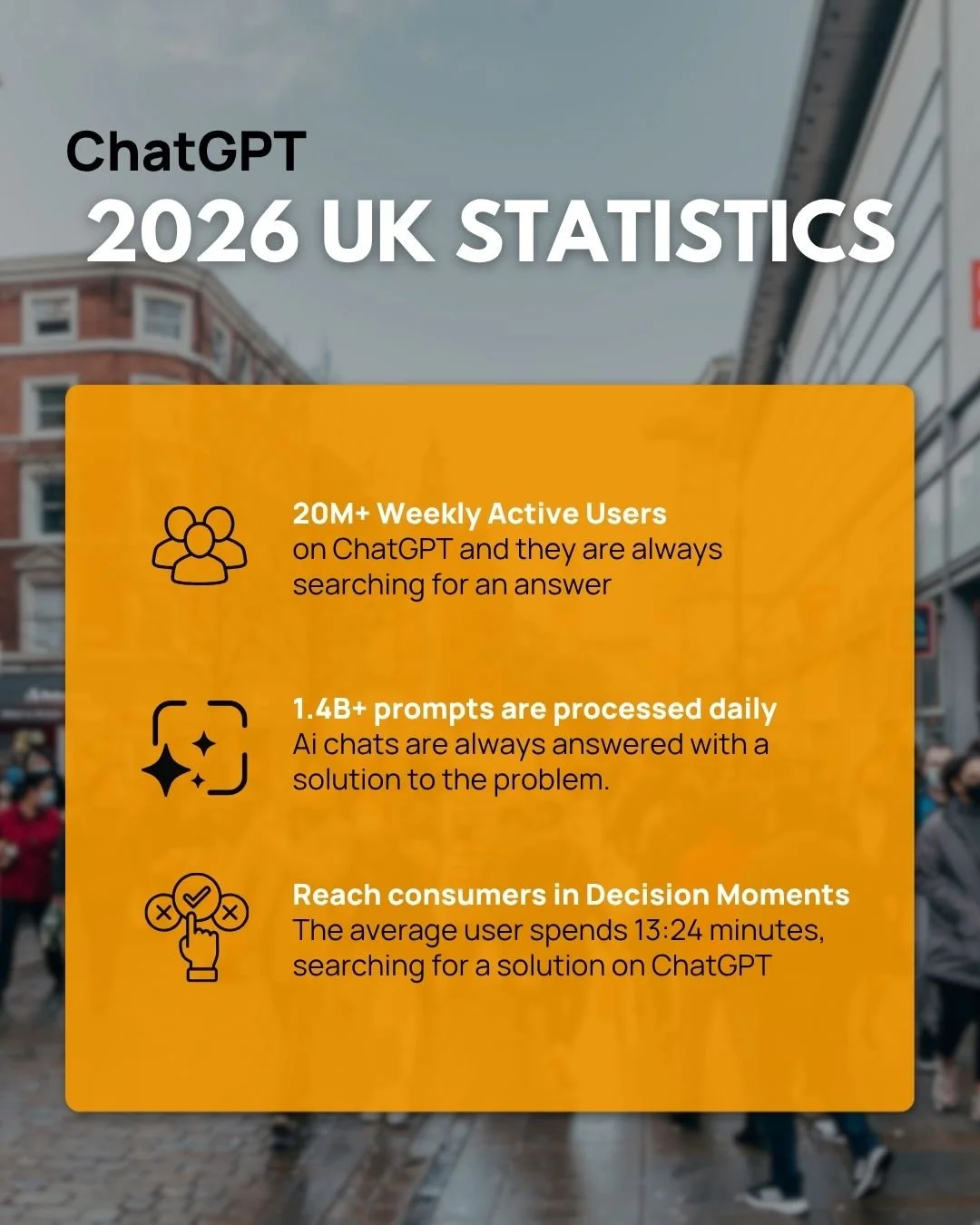
ChatGPT isn't a niche experiment anymore. In the UK, it has more than 20 million weekly active users constantly asking it questions, and it processes over 1.4 billion prompts a day. What makes this genuinely different from search or social is “how long” people stay in the conversation while making a decision - the average user spends over 13 minutes searching for a solution inside ChatGPT. That's not a passive scroll…that's active research.
OpenAI has been positioning ChatGPT Ads as the new "decision layer" that sits between awareness and conversion. Put simply - by the time someone is chatting with ChatGPT about a purchase, they've often already moved past the "what's out there" stage and are comparing, validating, or ready to act. For brands, that's a very different and arguably more valuable moment to show up in, rather than a cold impression on a social feed.
How the Ads Actually Work
The mechanics are refreshingly simple compared to a lot of ad platforms:
A user submits a prompt, and ChatGPT generates its normal response.
If relevant, ChatGPT will display a "Sponsored by" placement alongside that response, based on the intent and context of the conversation.
The ad unit itself is compact and standardised, designed to look like part of the experience without being mistaken for ChatGPT's own answer. OpenAI has been firm that ads must not influence the response itself.
Who Actually Sees These Ads
Ads currently only appear to users on the Free and Go (mid-tier) plans. Anyone on Plus, Pro, Business, or Enterprise won't see ads at all. So the audience you're reaching skews toward everyday consumer use rather than the power users and businesses paying for premium access.
Geographically, ads are currently live across the UK, US, Canada, Australia, New Zealand, Japan, and South Korea, with the next expansion phase to including Malaysia, Thailand, and the Philippines expected in Q4 2026. That regional roadmap is worth watching closely for anyone with interests in Southeast Asia; it means the window to get ahead of this channel locally is closing fast.
Targeting: Intent, Not Identity
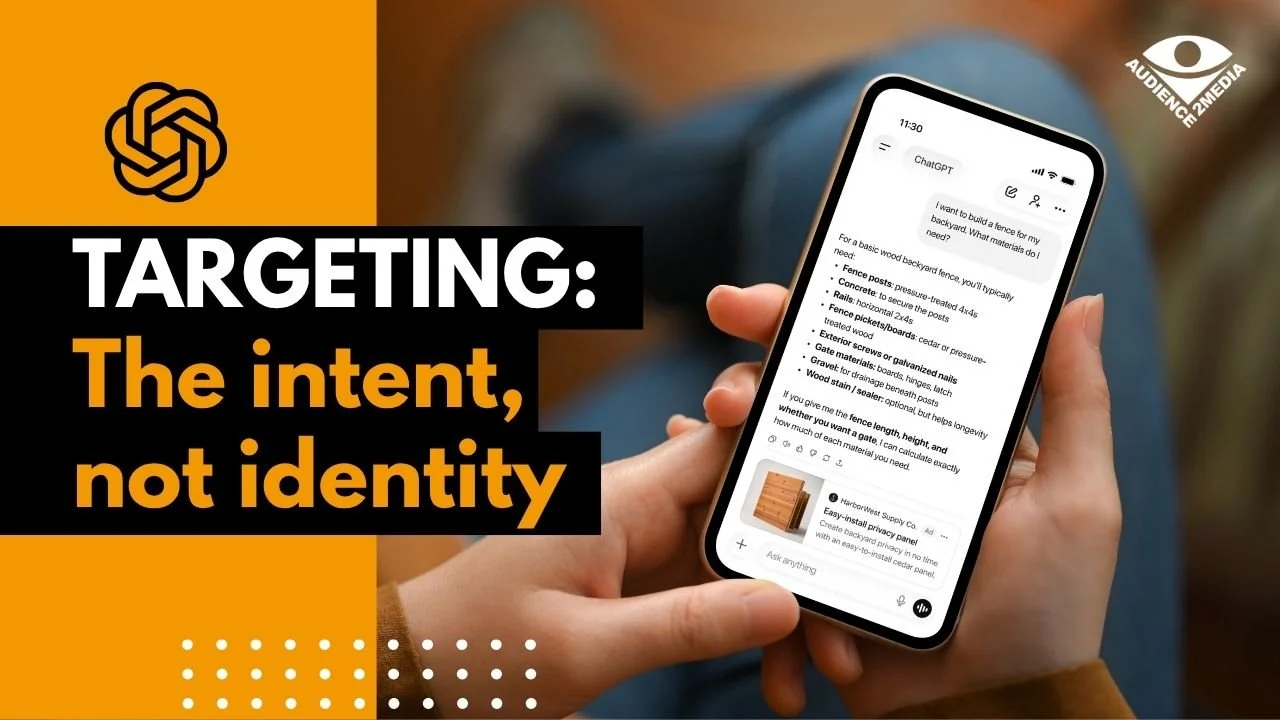
If you're coming from a Meta or Google mindset, this is the part that requires a slight mental shift. ChatGPT Ads currently support:
Prompt context: what the user is literally asking in the moment
Topic relevance: the broader subject the conversation sits in
User intent: where the person is in their decision journey
What it does not currently support is anything close to traditional audience targeting: no demographic targeting, no advanced geo-targeting, no audience segments built from third-party data. Instead of asking "who is my audience," you're asking "what is my audience trying to figure out right now."
OpenAI groups that thought process into three intent categories, and each one calls for a different creative approach:
Compare Intent: "What are the differences between Product A and Product B?"
Validate Intent: "Is Product A better for walking (for example)?"
Act Intent: "How do I use Product B as a beginner?"
A single product might need three different ad angles just to meet a user wherever they are in that funnel which, from a creative production standpoint, is a real shift from the "one ad,
Measurement: Familiar Metrics, New Plumbing
The reporting basics will feel familiar to any advertiser: impressions, clicks, and conversions are all trackable, and conversions specifically enable tracking of purchases, sign-ups, and leads; UTM parameters help trace the exact source of that traffic. It's not radically different from how digital campaigns are already reported - it's the targeting and creative side of the equation that's the real learning curve.
Final Comment from Rupert Bean, UK Managing Director, Audience2Media:
“This is an exciting time for the comms industry with the arrival of ChatGPT Ads. The platform rewards understanding what someone is trying to solve, not just who they are. Yes, it's early days, inventory is still limited, and targeting options will almost certainly expand but the brands that act now, rather than waiting for the platform to mature into something more familiar, are the ones who will have a head start and we’d be delighted to help them.”
If you're curious about testing this channel or just want to talk through what an intent-based creative strategy could look like for your business, then do get in touch – daniel@audience2media.com / rupert@audience2media.com.
Rubert Bean, Managing Director
Find Rubert and lots more on LinkedIn
On Sale Live: The Experience Economy Expo
The annual confex where the experience economy’s marketing, sales and ticketing community gathers. On Sale Live: The Experience Economy Expo is where the peer relationships and cross-sector conversations described in this guide happen in concentrated form. Built for professionals who are accountable for commercial outcomes across ticketed live experiences.
More from On Sale Group
On Sale Live: The Experience Economy’s annual marketing and ticketing expo: onsale.live.
Specialist training in experience economy marketing and commercial frameworks: theGIEM.com.
The experience economy’s annual marketing and ticketing expo: onsale.live/experience-economy-expo.