
Top Conferences for Immersive Experience Professionals
The immersive experience sector has grown into a commercially significant global industry.
What was, a decade ago, a niche creative format with a devoted but limited audience has become a mainstream experience economy category. Global IP productions sell hundreds of thousands of tickets across multiple territories. Institutional venues build permanent immersive programming. Investment capital flows into the format at a scale that would have been unrecognisable to the sector's founders.
The professional infrastructure that serves the people who build and sell these experiences has not kept pace with that commercial maturity. The conference landscape for immersive experience professionals reflects this. There are excellent events for specific disciplines within the sector. There is no single event that serves the full range of professionals who make immersive experiences happen.
This guide maps the events worth attending across the different functions that define an immersive experience business. It covers the commercial and marketing conferences, the creative and production events, the technology forums and the broader experience economy gatherings that each offer something specific and genuine to the immersive professional.
The guide is structured by what each event actually delivers, not by its reputation or its marketing. The aim is to help you build a conference calendar that serves your specific professional needs rather than one assembled by default.
Who works in immersive experiences and what each function needs
Immersive experience businesses employ a broader range of professionals than their public identity suggests. The audience sees the experience. Behind it is a team with diverse and specific professional development needs.
Understanding which conference serves which function is the starting point for building a useful calendar.
COMMERCIAL, MARKETING AND TICKETING PROFESSIONALS
The people responsible for selling the experience, building the audience and measuring commercial performance. Their core professional development needs are in on sale strategy, audience development, digital marketing applied to ticketed experiences, pricing and yield management, and the data infrastructure that connects marketing activity to ticket revenue.
This is the audience most underserved by the general conference landscape. Most marketing events are built for sectors with fundamentally different commercial structures. The immersive experience marketer needs events where perishable inventory, fixed campaign windows and word of mouth dependency are taken as the starting conditions, not as context to acknowledge briefly.
CREATIVE DIRECTORS AND EXPERIENCE DESIGNERS
The people responsible for the concept, narrative architecture and physical design of the experience. Their professional development needs are in spatial storytelling, emerging technology, audience journey design and the creative practices shaping what immersive experiences look like and feel like.
This function is better served by the existing conference landscape than commercial and marketing roles. There are substantive events covering immersive design and production, and the creative conversation in the sector is well developed.
PRODUCERS AND GENERAL MANAGERS
The people responsible for getting the experience built, opened and running commercially. Their professional development needs span production management, commercial strategy, venue and partner relationships, risk management and the operational challenges of running a high-touch live experience at consistent quality across multiple sessions and an extended run.
This function is perhaps the least well served by any single event. The operational and commercial dimensions of producing an immersive experience sit between several conference categories without being squarely addressed by any of them.
TECHNOLOGY AND TECHNICAL LEADS
The people responsible for the technical infrastructure of the experience: the hardware, software, sound design, lighting, interactive systems and the emerging AI and generative tools that are reshaping what is technically possible in the format.
This function is well served by technology-focused events, though the immersive experience application of those technologies is not always the primary focus of the events that cover them.
The commercial and marketing events
ON SALE LIVE: THE EXPERIENCE ECONOMY EXPO
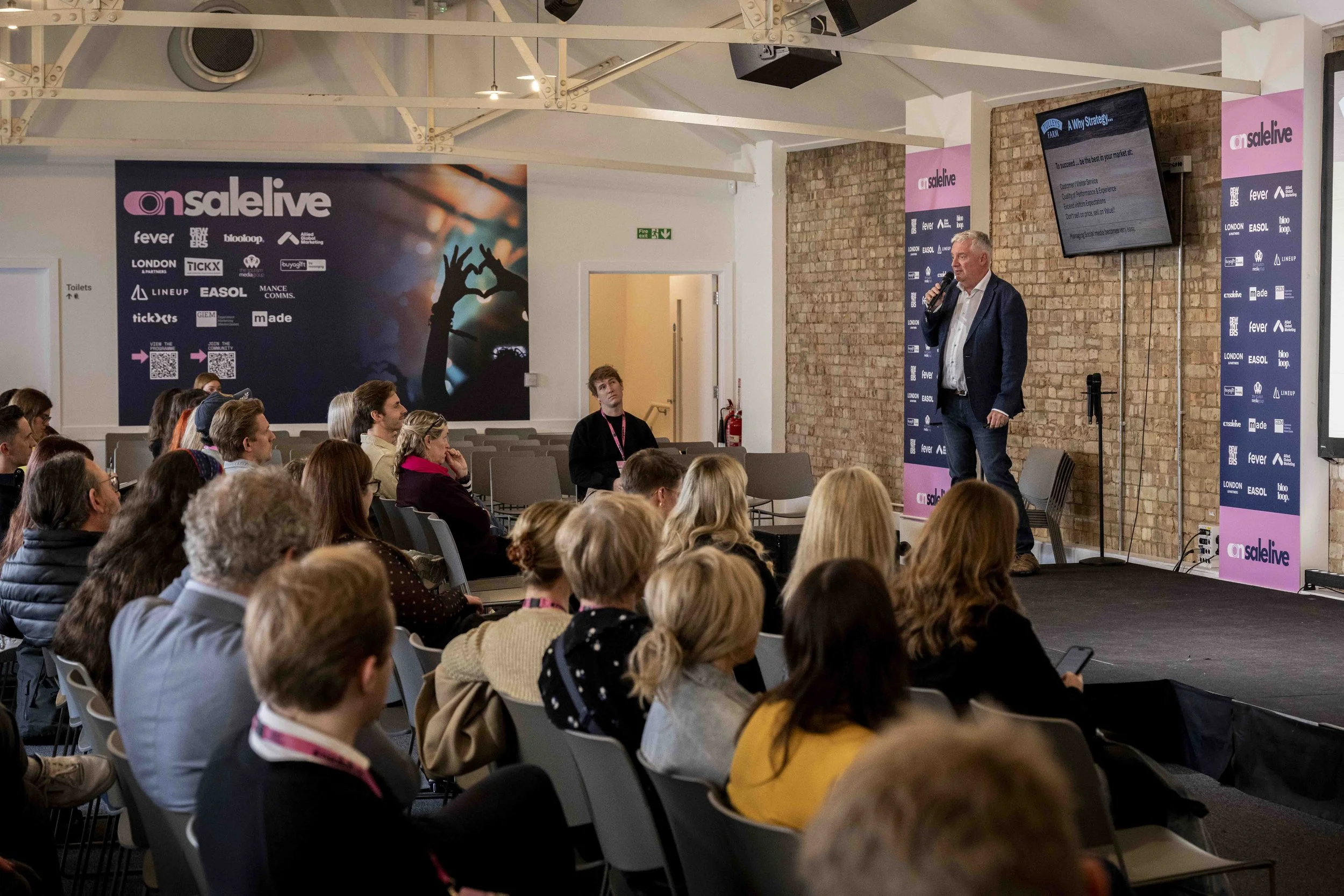
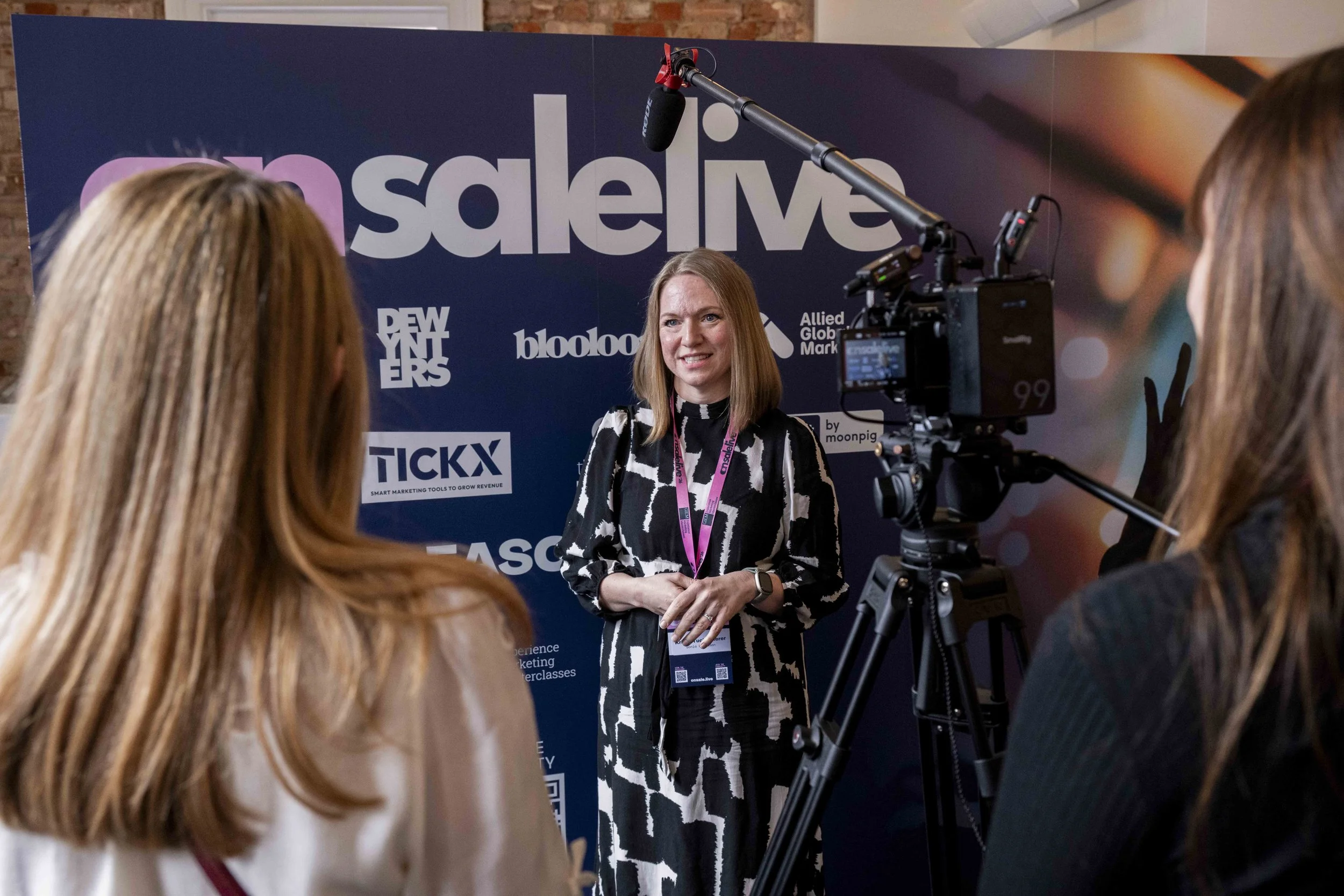
The only expo built entirely around the commercial reality of marketing and selling ticketed live experiences. Theatre, immersive entertainment, visitor attractions, festivals, live music and consumer events. The full experience economy in one room, with a programme built around the commercial pressures every business in that room is navigating. For immersive experience professionals on the commercial and marketing side, On Sale Live: The Experience Economy Expo is the most directly applicable professional event in the calendar. Every session starts from the context of perishable inventory and fixed campaign windows. Every speaker is accountable for ticket revenue and audience numbers. The cross-sector peer learning, as immersive producers compare approaches with festival marketers and visitor attraction teams, is one of the event's most consistently cited sources of value.
The 2026 programme covered AI-driven discovery and its implications for how audiences find experiences they have not yet heard of. User-generated content as a primary sales driver and how the most effective teams in the sector are building it into their campaign architecture. The commercial case for earned media. The lengthening consideration window and what it means for how campaigns are sequenced. Micro-trends in booking behaviour and what they reveal about audience decision-making.
For producers and general managers at immersive experience businesses, On Sale Live also offers useful commercial intelligence, even if the primary audience is the marketing and sales function. Understanding how the marketing and ticketing community is thinking about commercial performance is directly relevant to anyone with P&L responsibility in the sector. Details and registration at onsale.live.
TICKETING TECHNOLOGY FORUM
For immersive experience professionals whose work sits at the intersection of ticketing operations and commercial strategy, the Ticketing Technology Forum covers the platform and technology landscape with a level of specificity that general marketing events do not reach.
The conversations at this event are relevant to anyone making decisions about ticketing infrastructure, data architecture or the technical capabilities needed to support dynamic pricing, time-slot management and add-on selling at an immersive experience. The content is technology-forward rather than marketing-forward, but the commercial implications of the technology decisions it covers are directly relevant to immersive experience businesses.
The creative and production events
IMMERSIVE DESIGN SUMMIT
One of the more substantive events covering the creative and design dimensions of immersive experience specifically. The programme addresses spatial storytelling, audience journey architecture, the relationship between physical design and emotional response and the creative practices that define what makes an immersive experience work at the level of feeling rather than just execution. For creative directors, experience designers and producers working on the concept and production of immersive experiences, this event sits closest to the core of their professional practice. More at immersivedesignsummit.com.
What is particularly useful about the Immersive Design Summit for the broader immersive professional team is that it generates a shared vocabulary for the relationship between design decisions and audience experience. Marketing professionals who understand how the physical and narrative architecture of the experience shapes the stories audiences tell about it become more effective communicators of that experience. Producers who have engaged with the design conversation can make better decisions about creative compromises that affect commercial performance.
SXSW LONDON
SXSW London sits at the intersection of technology, culture and creative practice. For immersive experience professionals, its value is in the early access it provides to ideas and technologies that typically take one to three years to become mainstream in the sector.
The immersive experience industry is more dependent than most on emerging technology, both for the experiences it creates and for the tools it uses to market, sell and deliver them. AI and creative production. Spatial computing. New modalities of audience participation and co-creation. The conversations at SXSW about where these technologies are heading are directly relevant to immersive experience professionals who want to shape the next generation of their work rather than simply respond to it.
The commercial marketing content is not the primary focus. The translation work for immersive professionals is real. The value is in being early to ideas rather than current on practice.
THEMED ENTERTAINMENT ASSOCIATION THEA AWARDS AND SUMMIT
The Themed Entertainment Association brings together professionals from themed experiences, location-based entertainment and attraction design on a global scale. For immersive experience professionals whose work sits in or adjacent to the location-based entertainment space, the TЕА community offers peer connection and professional exchange with practitioners working at significant scale across global markets.
The commercial and design thinking at TЕА events often operates at a larger scale than most UK-based immersive experience businesses, which makes some content require contextual adjustment. The creative and strategic thinking on how to build experiences that work for mass audiences while maintaining emotional specificity is directly transferable.
The technology events
LIVE DESIGN INTERNATIONAL
Live Design International covers the technical production infrastructure of live experiences: lighting, sound, visual systems, staging and the integration of emerging technologies into live performance and experience contexts. For technical leads and production managers at immersive experience businesses, LDI is one of the most substantive professional events available.
The immersive experience application of live production technology is becoming more central to the LDI programme as the format has grown in commercial prominence. Sessions on interactive environments, sensor-driven experiences and the integration of AI into real-time performance contexts are directly relevant to the immersive sector's technical professionals.
XR ASSOCIATION AND SPATIAL COMPUTING EVENTS
As augmented reality, virtual reality and mixed reality technologies move from experimental to commercially viable in the immersive experience context, the professional events that cover these technologies are becoming more relevant to a broader range of immersive experience professionals.
For immersive experience businesses that are incorporating extended reality into their productions, or considering how these technologies might extend the reach of their experiences beyond the physical venue, engagement with the spatial computing professional community provides access to practitioners and technologists at the cutting edge of what is possible.
The broader experience economy events worth tracking
MUSEUMS AND HERITAGE SHOW
For immersive experience professionals whose work intersects with cultural institutions, heritage sites or publicly funded arts organisations, the Museums and Heritage Show is increasingly relevant. The sector has moved significantly toward more immersive, participatory and experience-led programming, and the commercial conversations at this event now reflect that.
The most useful aspect for immersive experience professionals is the cross-sector exchange with cultural organisations that have developed sophisticated audience development programmes, repeat attendance strategies and earned income models. These organisations have often been working on the commercial sustainability of experience-led engagement for longer than the commercial immersive sector and have developed approaches that transfer directly.
EVENT PRODUCTION AND INDUSTRY GATHERINGS
The broader event production industry generates its own conference infrastructure that is occasionally relevant to immersive experience professionals. Production, logistics, health and safety, workforce management and venue partnership are concerns that immersive experience businesses share with the wider events industry even when their creative and commercial model is quite different.
The value in these events is operational and relational rather than strategic. The peer connections with suppliers, venue partners and production specialists are useful. The programme content is rarely built around the specific challenges of the immersive format.
The development layer that conferences alone cannot provide
A conference calendar, however well curated, does not substitute for structured professional development. For immersive experience professionals at every level, the distinction matters.
Conferences surface current thinking, build peer relationships and give professionals a sense of where the sector is heading. They are excellent at generating intelligence and connection. They are limited in their ability to build systematic capability.
The marketing and sales professionals at immersive experience businesses, in particular, face a skills gap that the conference landscape has not historically addressed. General marketing qualifications build useful foundations but do not cover on sale strategy, yield thinking applied to marketing decisions, or the commercial logic of perishable inventory. Immersive-specific experience provides sector knowledge but develops unevenly depending on the quality of the immediate working environment.
The GIEM Experience Marketing Masterclasses were built to close that gap. Specialist professional development for marketing and sales managers in the experience economy, covering on sale campaign architecture, commercial frameworks, audience psychology, digital skills built for the context of ticketed experiences and AI-driven search. Cohort-based and in person, with peers from across the experience economy including immersive entertainment. For immersive experience professionals on the commercial and marketing side of their organisations, the GIEM is the most direct route to building the specific capabilities the format demands. Full details at theGIEM.com.
Building a conference calendar across the immersive experience team
The challenge for most immersive experience businesses is that the relevant professional events are distributed across different disciplines and different parts of the calendar. A conference strategy that works for the team as a whole, rather than for individual functions attending events relevant only to themselves, generates more value.
SHARE INTELLIGENCE ACROSS FUNCTION
The marketing lead who attends On Sale Live and the creative director who attends the Immersive Design Summit are bringing back different kinds of intelligence. Building a practice of sharing that intelligence across the team, rather than siloing it within the function that attended, multiplies the return on each conference investment.
What the commercial team learns about how audiences are discovering experiences and making booking decisions is relevant to creative and production decisions. What the creative team learns about spatial design and emotional response is relevant to how the marketing team communicates the experience. The most effective immersive experience businesses treat conference intelligence as a shared asset.
MATCH EVENT TO THE DEVELOPMENT NEED
Different career stages and different professional challenges call for different events. A marketing manager in their first immersive experience role needs a different conference calendar to a creative director with a decade of immersive production behind them. Being explicit about what specific development need each event is serving, rather than attending the same events by default each year, produces better returns on the investment.
COMBINE EVENT ATTENDANCE WITH STRUCTURED DEVELOPMENT
The professionals at immersive experience businesses who develop most rapidly are those who combine event attendance with structured professional development rather than treating them as alternatives. On Sale Live for current practice and peer community. The GIEM for the commercial frameworks and applied skills that conferences surface but do not teach. The combination is more valuable than either alone. See the full picture at onsale.live and theGIEM.com.
Further resources for immersive experience professionals
For staying current on the creative, critical and commercial conversation within the immersive sector specifically, No Proscenium is the most substantive independent publication dedicated to immersive and experience design. It covers both the creative and commercial dimensions of the form, tracks significant productions internationally and provides a useful lens on where the sector is heading from a practitioner perspective.
For the broader context of the global experience economy, the data on consumer spending, attendance trends and market growth that shapes the commercial environment immersive experience professionals operate within, PwC's Global Entertainment and Media Outlook provides rigorous annual analysis of the live experience market alongside the wider entertainment and media landscape. The data on consumer spending patterns and the relative growth of live experiences within entertainment budgets is directly relevant to how immersive experience businesses think about their commercial positioning and long-term audience development.
The bottom line
The immersive experience sector is professionalising. The conference infrastructure that serves it is developing, though unevenly across different functions.
The commercial and marketing side of the sector is best served by events that understand the experience economy's commercial logic: On Sale Live sits at the centre of that. The creative and production side is reasonably well served by immersive design and live production events. The technology function has access to substantive events but rarely in an immersive-specific context. Producers and general managers are the most underserved, drawing from multiple event categories without any single event addressing the full range of their professional needs.
The most productive approach for immersive experience businesses is to treat conference attendance as a team-level strategy rather than an individual function decision. Match events to specific development needs. Share the intelligence across the organisation. Combine event attendance with structured professional development rather than treating one as a substitute for the other.
The peer network built through the right combination of events is one of the most commercially valuable assets an immersive experience professional can develop. The sector is close-knit, generous with knowledge when the right conditions exist, and growing fast enough that being connected to the right community is a genuine competitive advantage.
Written and published by Dawn Farrow
ON SALE LIVE: THE EXPERIENCE ECONOMY EXPO | onsale.live
Connect with the experience economy community
On Sale Live: The Experience Economy Expo is the annual expo for marketing, sales, ticketing and communications professionals across the experience economy. The commercial home event for immersive experience professionals responsible for building audiences and selling tickets. Details and registration at onsale.live.
For specialist professional development in experience economy marketing, on sale strategy, commercial frameworks and digital skills built for ticketed experiences: theGIEM.com.
For strategic consultancy on immersive experience ticketing, commercial strategy and audience development: dawnfarrow.com.