
Best Conference for Immersive Experience Marketing
Immersive experience marketing is a specific discipline with specific commercial challenges.
It is not a variant of general event marketing. It is not a niche application of brand experience principles. It is a commercially distinct practice built around a product that cannot be shown before purchase, sold through a booking journey that involves social decision-making, and measured against perishable inventory that closes permanently whether it is full or not.
The professionals who do this work well, the marketing managers, campaign leads, audience development specialists and commercial directors working across immersive entertainment businesses, need a conference that understands that context. Not one that acknowledges it briefly and then proceeds with frameworks built for fundamentally different commercial structures.
This piece sets out what immersive experience marketing professionals need from a professional event, how to evaluate the options that exist, and where the most commercially relevant conversations in the sector are currently happening.

The specific challenges immersive experience marketers face
To understand what makes a conference genuinely useful for immersive experience professionals, it helps to be specific about the commercial challenges that define the discipline.
SELLING SOMETHING THAT CANNOT BE DEMONSTRATED
The central marketing challenge of immersive experience is that the product is a feeling. You cannot put it in a trailer. You cannot screenshot it. You cannot describe it in a way that adequately conveys what it is like to be inside the world.
Marketing frameworks built around demonstrable products, where the advertisement shows you what you are buying, do not transfer naturally here. The immersive marketer needs a different approach to creative, to copy, to social content and to the role of word of mouth in the purchase journey. A conference that surfaces how the best practitioners in the sector are solving this problem is worth attending. One that offers general creative strategy content requires extensive translation before it is useful.
SMALL CAPACITY AND HIGH YIELD DEPENDENCY
Most immersive experiences run with audience numbers per session that are a fraction of what a theatre or music venue would consider normal. That small capacity means each available seat carries a disproportionate commercial weight. Yield per seat matters more here than in almost any other live experience format.
The marketing decisions that flow from this, how to price sessions across the booking window, how to use genuine scarcity rather than manufactured urgency, how to structure promotional mechanics without anchoring price expectations downward, are specific to the format. A conference that treats capacity as an afterthought is not serving this audience well.
WORD OF MOUTH AS THE PRIMARY SALES DRIVER
In immersive experience marketing, word of mouth is not a supplementary outcome from good work. It is the commercial engine. The consideration window for a first-time buyer of an immersive experience is typically longer than for more familiar formats, because the purchase requires trusting a recommendation about something they cannot verify for themselves.
That means the marketing strategy for an immersive experience must be designed around enabling, accelerating and amplifying word of mouth at every stage of the campaign. How the most effective practitioners in the sector approach this, what they have tried, what has worked and what has not, is exactly the kind of peer intelligence that conference attendance should be generating.
THE CROSS-SECTOR KNOWLEDGE GAP
What I am seeing consistently across the immersive sector is that marketing professionals are solving problems in isolation that have already been addressed, often elegantly, by teams in adjacent parts of the experience economy. The visitor attraction that built a sophisticated repeat attendance programme. The festival that redesigned its booking journey and measured a meaningful uplift in conversion. The theatre that restructured its database segmentation and reduced its cost of acquisition significantly.
These solutions are transferable to immersive. The knowledge is not making the journey because the immersive sector does not yet have the cross-sector professional infrastructure that would facilitate it. That is the gap a good conference fills.
What to look for when evaluating a conference
Not every event that appears relevant to immersive experience marketing professionals will actually serve their needs. The markers of a conference that will:
The programme uses the vocabulary of the discipline. On sale strategy. Booking window behaviour. Yield per seat. Audience development for repeat attendance. If these terms are absent, the content is not built for this audience.
Speakers are practitioners accountable for commercial outcomes, not commentators describing the sector from outside it. The most useful conference content comes from people who are measured on ticket revenue and audience numbers, not on outputs or awareness metrics.
The room includes people working across the experience economy broadly, not just within immersive specifically. Cross-sector learning is one of the most underused competitive advantages available to immersive marketing professionals.
The format creates conditions for genuine peer conversation, not just passive content consumption. The conversations that happen between sessions, over lunch, at the end of the day, are often where the most commercially useful exchange takes place.
The content addresses the commercial specifics of perishable inventory and fixed campaign windows, not just the creative and experiential dimensions of the format.
Apply those criteria and the list of conferences that pass narrows significantly.
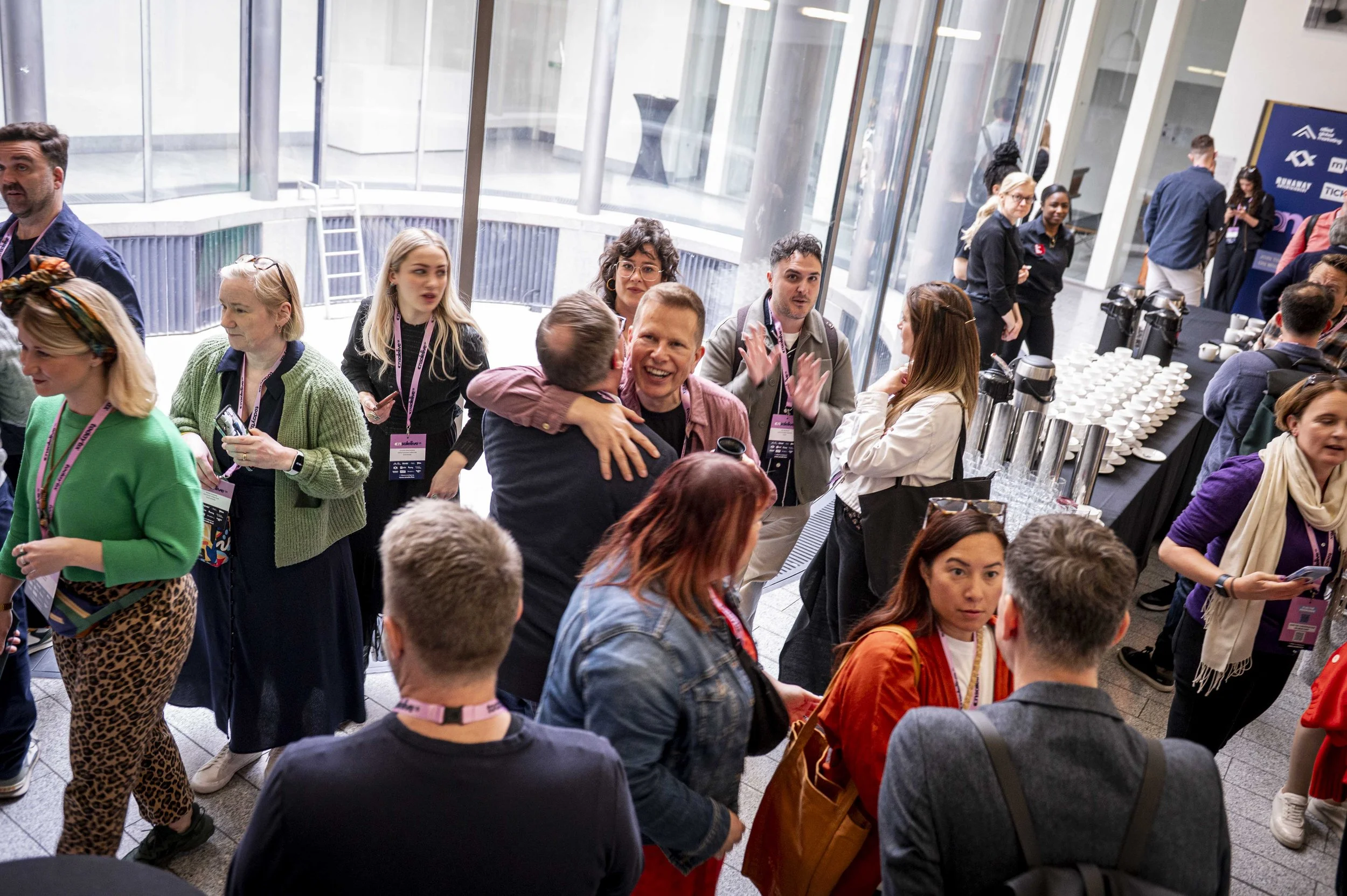
On Sale Live: the experience economy expo: built for this audience
On Sale Live: The Experience Economy Expo, 11 and 12 May 2027
On Sale Live: The Experience Economy Expo is the only expo built entirely around the commercial reality of marketing and selling ticketed live experiences.
The experience economy it serves is broad: theatre, festivals, visitor attractions, live music, consumer events and immersive entertainment. That breadth is deliberate. The commercial challenges that define immersive experience marketing — perishable inventory, fixed campaign windows, word of mouth dependency, group purchase behaviour — are shared, in different forms, across all of these sectors.
What On Sale Live: The Experience Economy Expo provides that no other event does is a room where everyone is working on a version of the same problem. The cross-sector intelligence this generates is genuinely useful for immersive professionals. The theatre marketer who has been running sophisticated pre-on-sale demand building campaigns for years has something to offer the immersive producer who has been approaching each launch as a standalone event. The festival team that has developed rigorous booking velocity modelling has something to offer the immersive entertainment business that is still reading sales data passively.
WHAT THE PROGRAMMES COVERS FOR IMMERSIVE PROFESSIONALS
The On Sale Live: The Experience Economy Expo programme is built around the commercial pressures that experience economy professionals face. For immersive experience marketers specifically, the most directly applicable strands include:
AI-driven discovery and how it is changing the way audiences find experiences they have never heard of. For immersive productions, where word of mouth has historically been the primary discovery mechanism, understanding how AI-generated search responses are reshaping discovery is commercially significant.
User-generated content and its growing role as a primary sales driver. What the sector's leading practitioners are doing to design for UGC, how they are integrating it into paid campaigns and what the evidence shows about its conversion effectiveness compared to produced creative.
The consideration window and how it is lengthening across the experience economy. The implications for campaign structure, communication sequencing and the timing of promotional mechanics are directly relevant to immersive productions.
Earned media and the commercial case for PR as part of the marketing mix. For immersive experiences, where the product cannot be shown and credible third-party endorsement carries significant weight in the purchase decision, this strand is particularly relevant.
Data infrastructure and how the most commercially sophisticated experience economy businesses are building the audience and booking data assets that reduce future acquisition costs and improve campaign precision.
The 2026 edition drew over 200 senior marketing, sales, ticketing and communications professionals from across the experience economy. The immersive entertainment sector is a significant part of that community. Details of the next edition and registration at onsale.live.
Adjacent events worth considering
IMERSIVE DESIGN AND PRODUCTION EVENTS
The creative and production side of the immersive sector has its own conference infrastructure, covering spatial design, narrative architecture, technology integration and audience journey. These events are useful for immersive experience marketing professionals who want to deepen their understanding of the product they are selling.
The commercial marketing content is not the primary focus of these events. But the thinking on how immersive environments create feeling, how design decisions shape audience behaviour and how the physical and narrative architecture of an experience affects the stories people tell about it is directly relevant to marketing strategy. Understanding what you are selling at a structural level makes you a more effective marketer of it.
BROADER EXPERIENCE ECONOMY EVENTS
Events that serve the wider experience economy, covering visitor attractions, cultural venues, festivals and live entertainment alongside immersive, offer cross-sector exposure that has genuine value. The commercial logic shared across these sectors is more transferable than the format differences suggest. The immersive marketing professional who engages with how a visitor attraction has solved a repeat attendance challenge, or how a festival has restructured its on sale campaign architecture, will find relevant intelligence that sector-specific immersive events do not generate.
For broader research on the experience economy and the consumer behaviour patterns that shape what audiences want from live experiences, Barclays Experience Economy research offers useful market context. The UK experience economy is valued at over £134 billion annually. Understanding the scale and the consumer trends within it gives immersive marketing professionals a broader commercial frame for the decisions they make within their specific format.
The development layer that sits alongside conference attendance
A conference is not a substitute for structured professional development. The two serve different purposes and the immersive experience marketing professional needs both.
Conference attendance gives you current thinking, peer connection and a sense of where the sector is heading. It surfaces what is being tried, what is working and what the community is concerned about right now. That intelligence is real and it is commercially useful.
What conferences cannot do is build systematic capability. Understanding the principles of on sale campaign architecture in a session does not give you the framework to design one. Hearing about yield thinking applied to marketing decisions does not develop the commercial literacy to act on it consistently. Knowing that AI-driven search is changing how audiences discover experiences does not tell you how to structure your content to appear in those responses.
The GIEM Experience Marketing Masterclasses fill that gap. Specialist professional development for marketing and sales managers in the experience economy, covering on sale strategy, commercial frameworks, audience psychology, digital skills and AI-driven search, all taught in the context of ticketed experiences with a peer cohort from the sector. For immersive experience marketing professionals, the GIEM is the most direct route to developing the specific commercial skills that the format demands. Find out more at theGIEM.com.
Building a development calendar that serves immersive professionals
The question of which conference to attend is ultimately a question about how to invest limited professional development time and budget for maximum return.
For immersive experience marketing professionals, the most productive approach is:
ABCHOR WITH THE COMMERCIAL COMMUNITY
On Sale Live is the professional home event for experience economy marketing professionals. It is where the peer relationships that matter for an immersive marketing career are built and where the commercial conversations that are directly relevant to your context are happening. Whatever else you attend in a given year, this is the anchor. Register and find out more at onsale.live.
ADD STRUCTURED DEVELOPMENT
One or two days at a conference will not build the commercial skills that define strong immersive experience marketing professionals. Structured professional development, sector-specific and practically focused, is how those skills are developed. Build it into the annual plan as a distinct investment rather than treating it as an alternative to conference attendance.
ENGAGE SELECTIVELY WITH ADJACENT SECTORS
The cross-sector learning available from visitor attractions, theatres, festivals and live entertainment is one of the most underused advantages available to immersive marketing professionals. Events that bring those sectors together, and peer relationships built across the experience economy more broadly, generate intelligence that immersive-only peer networks cannot.
TRACK THE TECHNOLOGY AND DESIGN CONVERSATION
The immersive sector is more dependent than most on emerging technology for experience design. Keeping a line of sight on where technology is heading, through events, publications and the professional networks that track it, gives immersive marketing professionals earlier access to the tools and formats that will define how audiences experience and discover immersive work. The Immersive Experience Network is a useful community resource for tracking developments across the immersive sector and staying connected with the practitioners shaping it.
The bottom line
Immersive experience marketing has grown as a commercial discipline faster than the professional infrastructure that serves it has kept pace.
The conferences that are most useful to professionals in this space are those that treat the commercial challenges of the experience economy, perishable inventory, fixed campaign windows, word of mouth dependency, group purchase behaviour, as their starting point rather than as context to acknowledge in passing.
On Sale Live is the event that most directly serves that need. The immersive experience marketing community that is part of the broader On Sale Live audience brings specific challenges that generate some of the most productive cross-sector conversations at the event, because the questions immersive professionals are working on are versions of questions that visitor attraction, festival and theatre peers have been navigating for longer.
The professional development landscape for immersive experience marketing is improving. The community is growing. The peer connections being built at the right events are becoming a more significant commercial asset as the sector matures. Getting into the right room is the most direct investment an immersive experience marketing professional can make in their own commercial effectiveness.
Written and published by Dawn Farrow
Join the experience economy marketing community
On Sale Live is the annual expo for marketing, sales, ticketing and communications professionals across the experience economy. The only event built entirely around the commercial reality of selling ticketed live experiences. Details and registration at onsale.live.
For specialist professional development in experience economy marketing, on sale strategy and commercial frameworks built for ticketed experiences: theGIEM.com.
For strategic consultancy on immersive experience ticketing, commercial strategy and audience development: dawnfarrow.com.